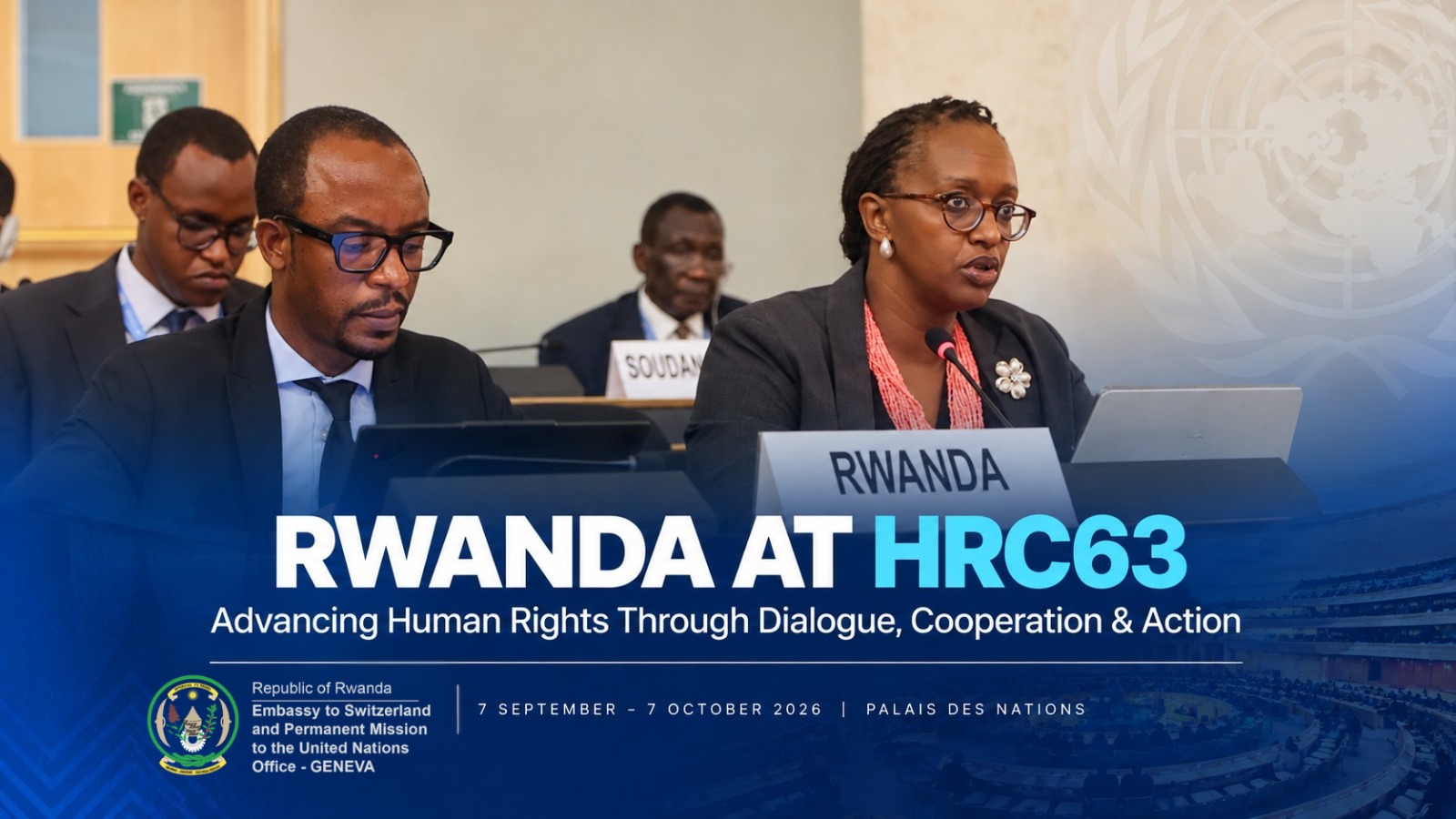
Rwanda’s Engagement at the 63rd Session of the Human Rights Council
The 63rd session of the United Nations Human Rights Council concluded on 7 October 2026, following a month of discussions at the Palais des Nations in Geneva. Deliberations covered a wide range of human rights issues and measures to strengthen protection and fulfil human rights commitments.
Rwanda engaged on the right to development, economic and social rights, gender equality, and the protection of vulnerable populations. These discussions underscored the importance of translating human rights commitments into tangible improvements in people’s lives.
Rwanda also addressed justice, accountability, and the prevention of genocide and other atrocity crimes, drawing on its history and national experience. Discussions highlighted the role of international cooperation, early prevention, and timely responses in addressing conditions that can lead to serious human rights violations.
On regional and country-specific situations, including developments in the Great Lakes region, Rwanda raised concerns about insecurity, hate speech, armed groups—including the UN-sanctioned, DRC-backed FDLR—and the recruitment of mercenaries in the Democratic Republic of the Congo (DRC), calling for concrete action to address these drivers of regional instability and human rights violations.
Rwanda also took part in discussions on technical assistance and capacity-building, stressing that these efforts should help Member States meet their human rights obligations rather than serve as a platform for politicizing the Council’s work.
Rwanda also joined Indonesia, Bangladesh, Brazil, Cuba, Finland and France as main sponsors of a resolution titled Enhancing Equal Access of Children to Adequate Nutritious Food.
Rwanda also joined Armenia, Estonia, Kazakhstan, Senegal, Sweden and Uruguay as main sponsors of a resolution titled Strengthening International Cooperation for Promoting and Protecting the Rights of Women and Girls in the Context of Digital Technologies. Both resolutions received cross-regional support from additional sponsors and were adopted by the Council without a vote.
Rwanda’s engagement underscored that improvements in human rights situations depend on practical action, effective institutions, national ownership, and constructive cooperation with partners.
Looking ahead, Rwanda will continue to support dialogue and cooperation that strengthen human rights protection and translate commitments into lasting progress for people and communities.
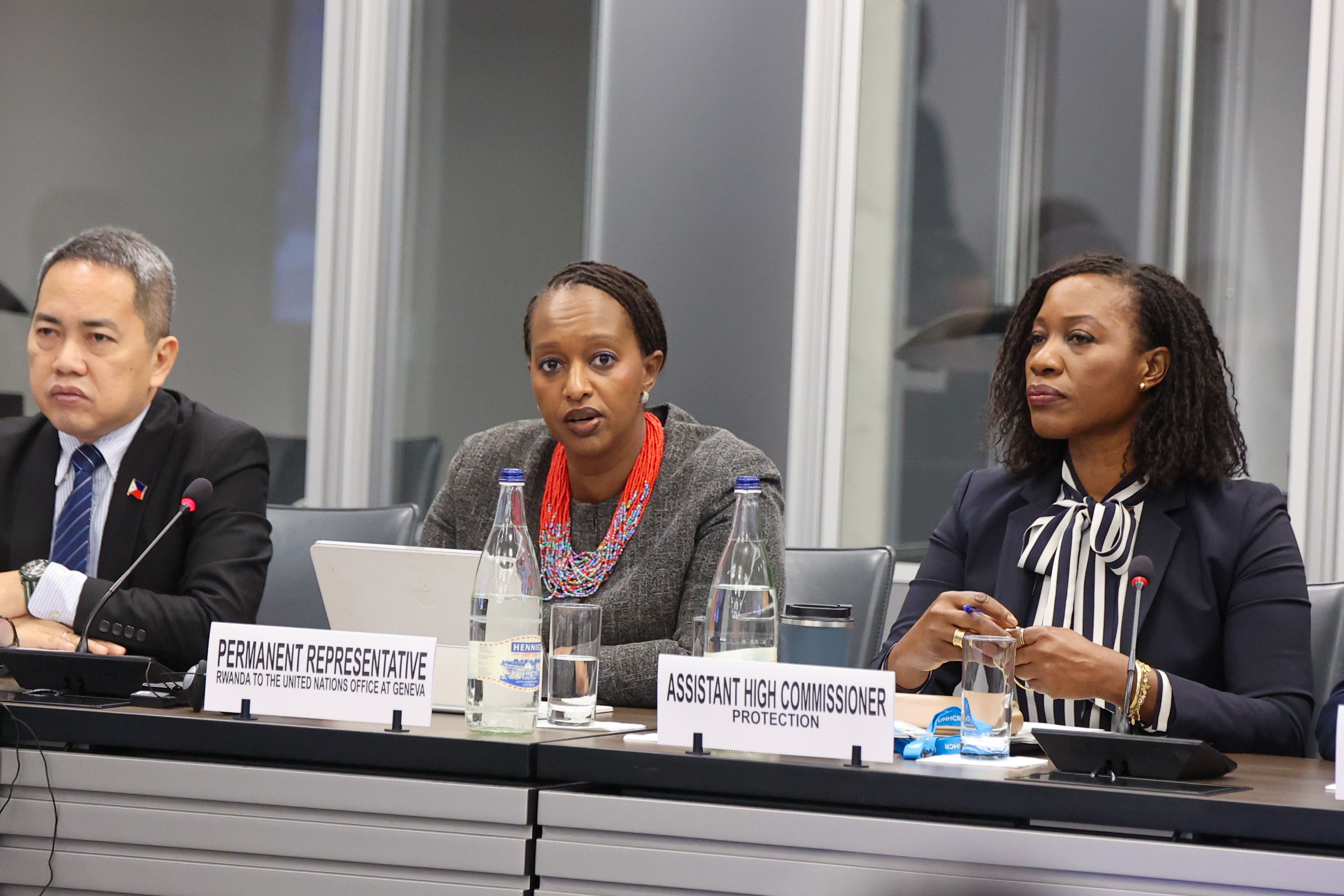
Rwanda’s Statement at the UNHCR ExCom77 Side Event Marking the 65th Anniversary of the Convention on the Reduction of Statelessness
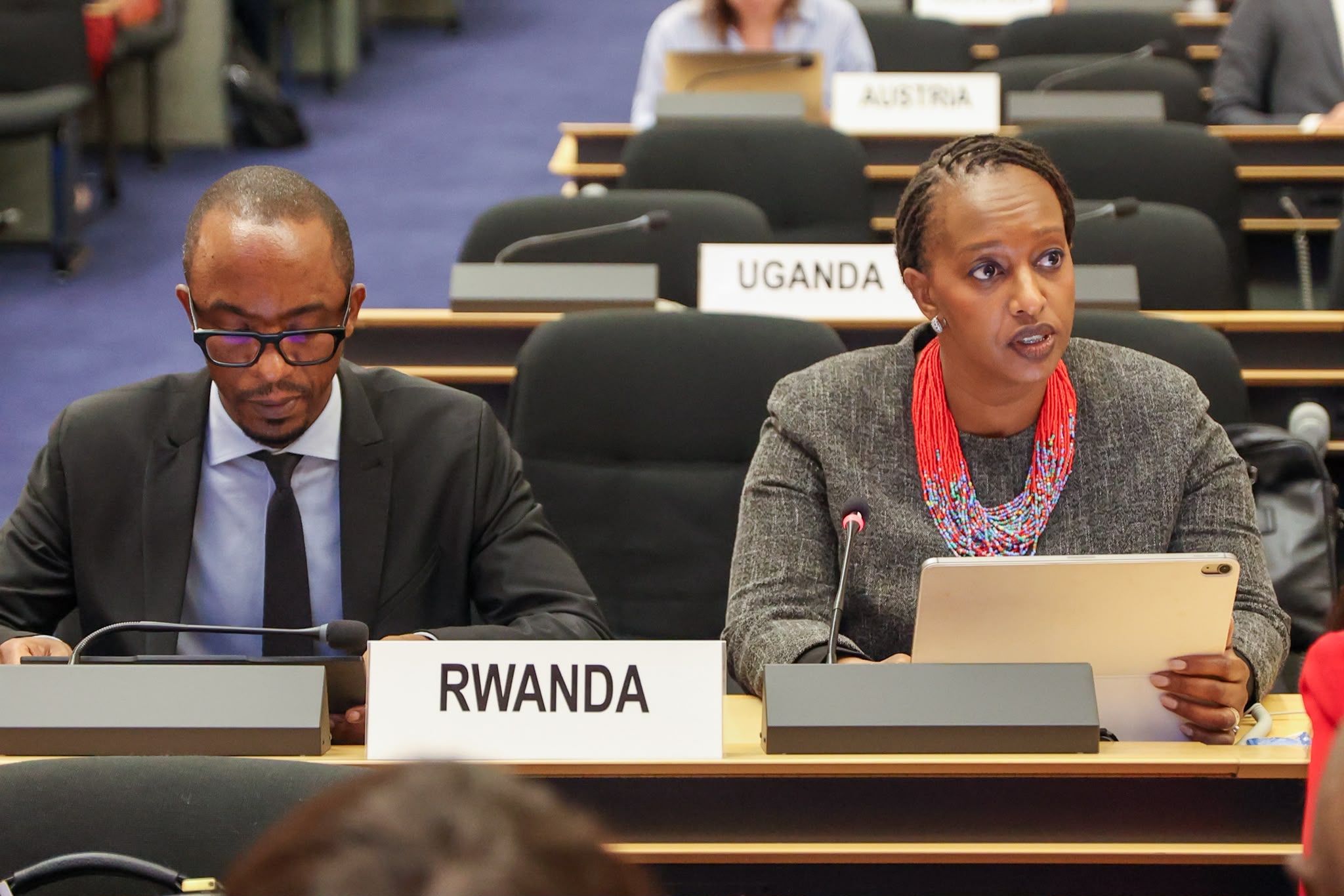
Rwanda's National Statement at the 77th Session of the UNHCR Executive Committee
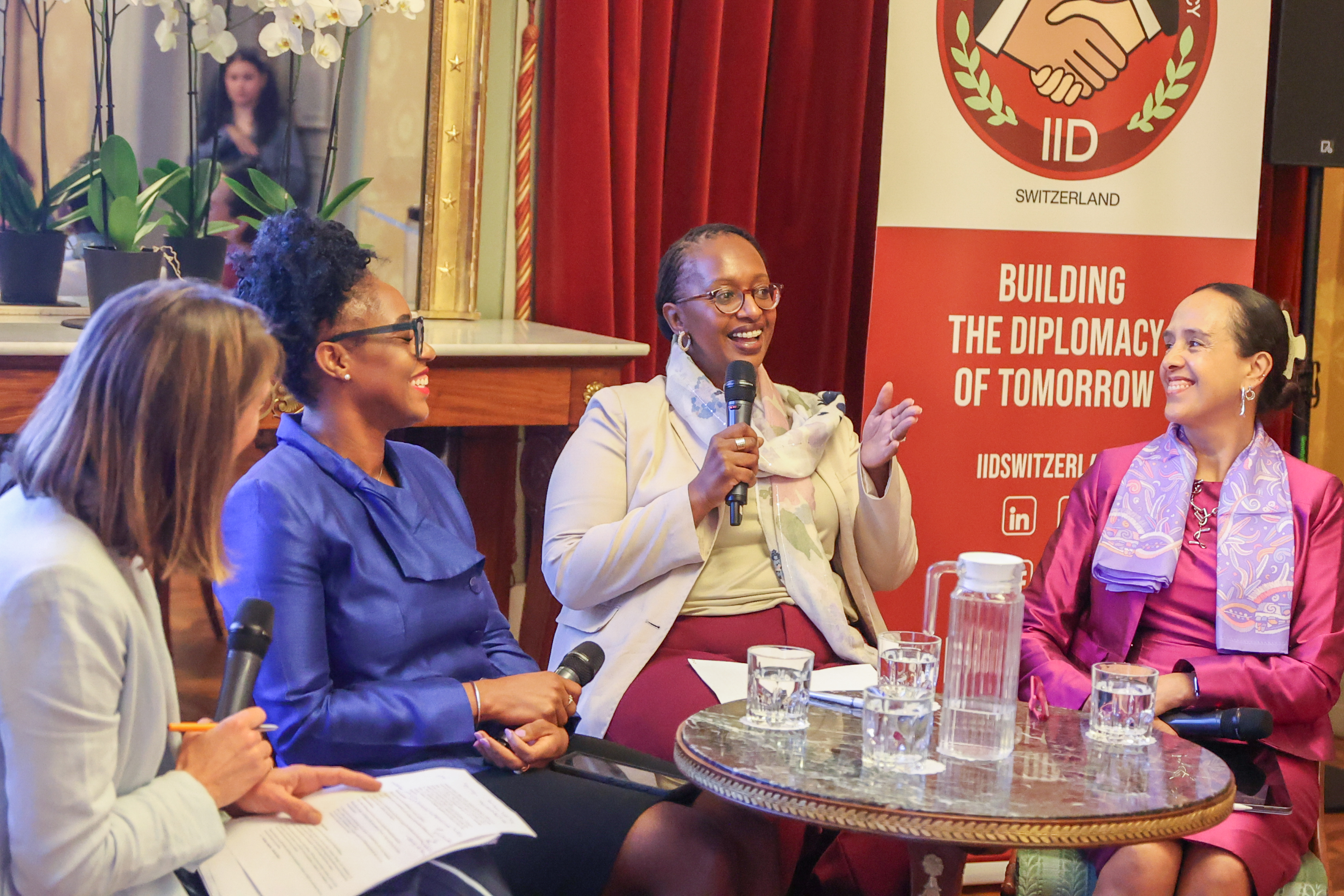
Ambassador Urujeni Bakuramutsa Participates in Roundtable on Women in Diplomacy in Geneva
Rwanda’s Engagement at the 63rd Session of the Human Rights Council
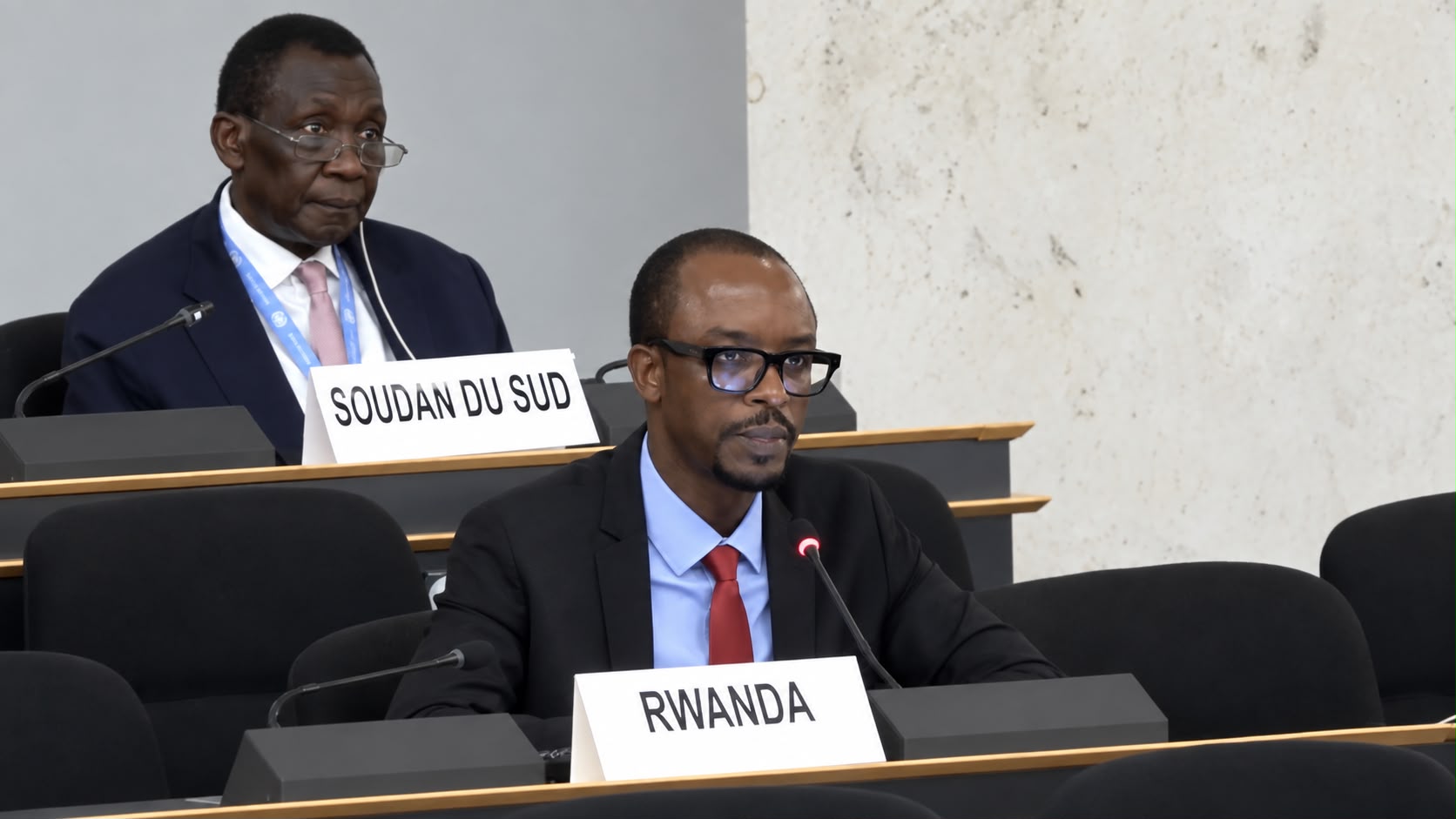
HRC63: Rwanda’s Statement on the Adoption of the Resolution on Technical Assistance and Capacity-Building in the DRC
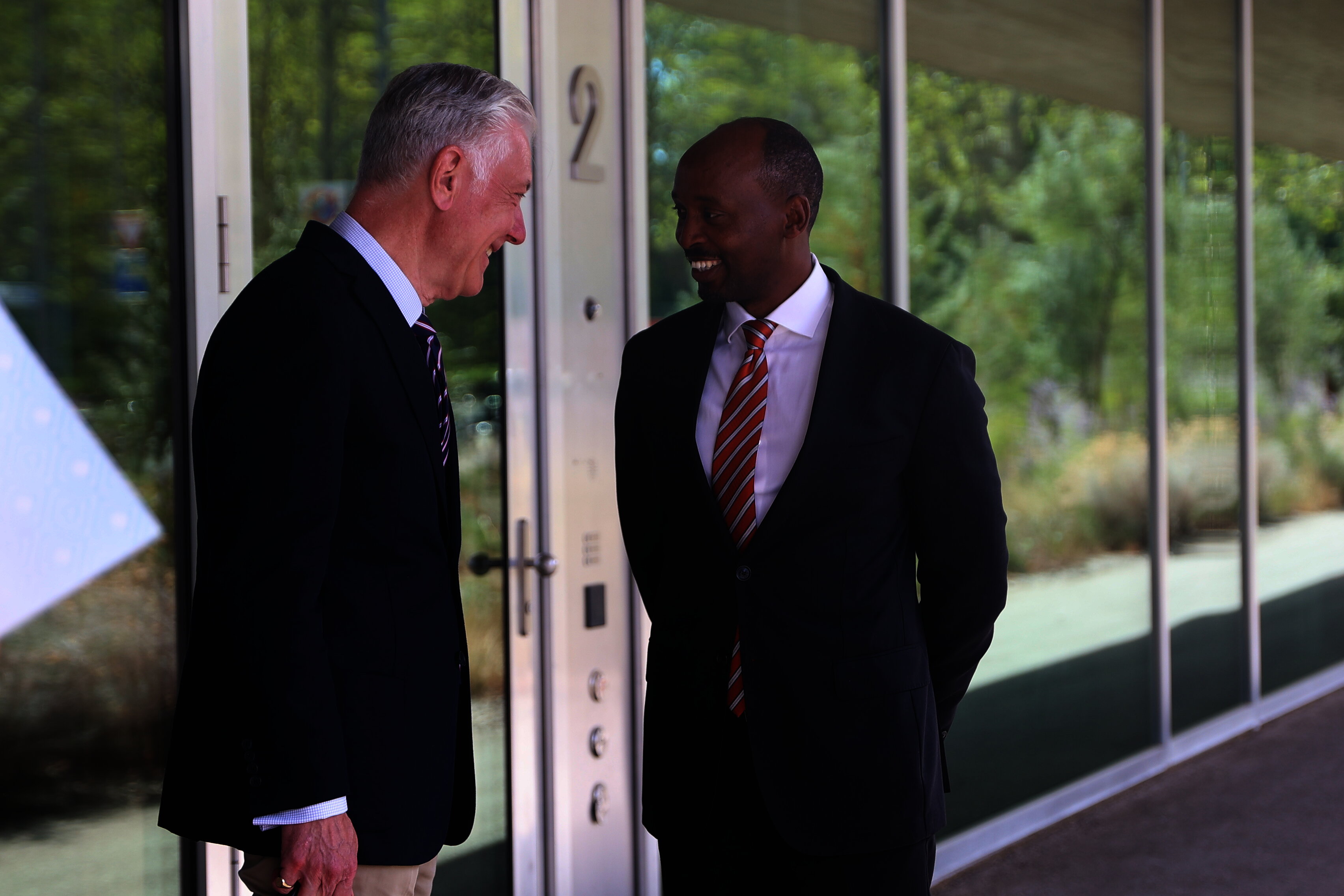
Rwanda and Switzerland Strengthen Exchanges on Health and Life Sciences
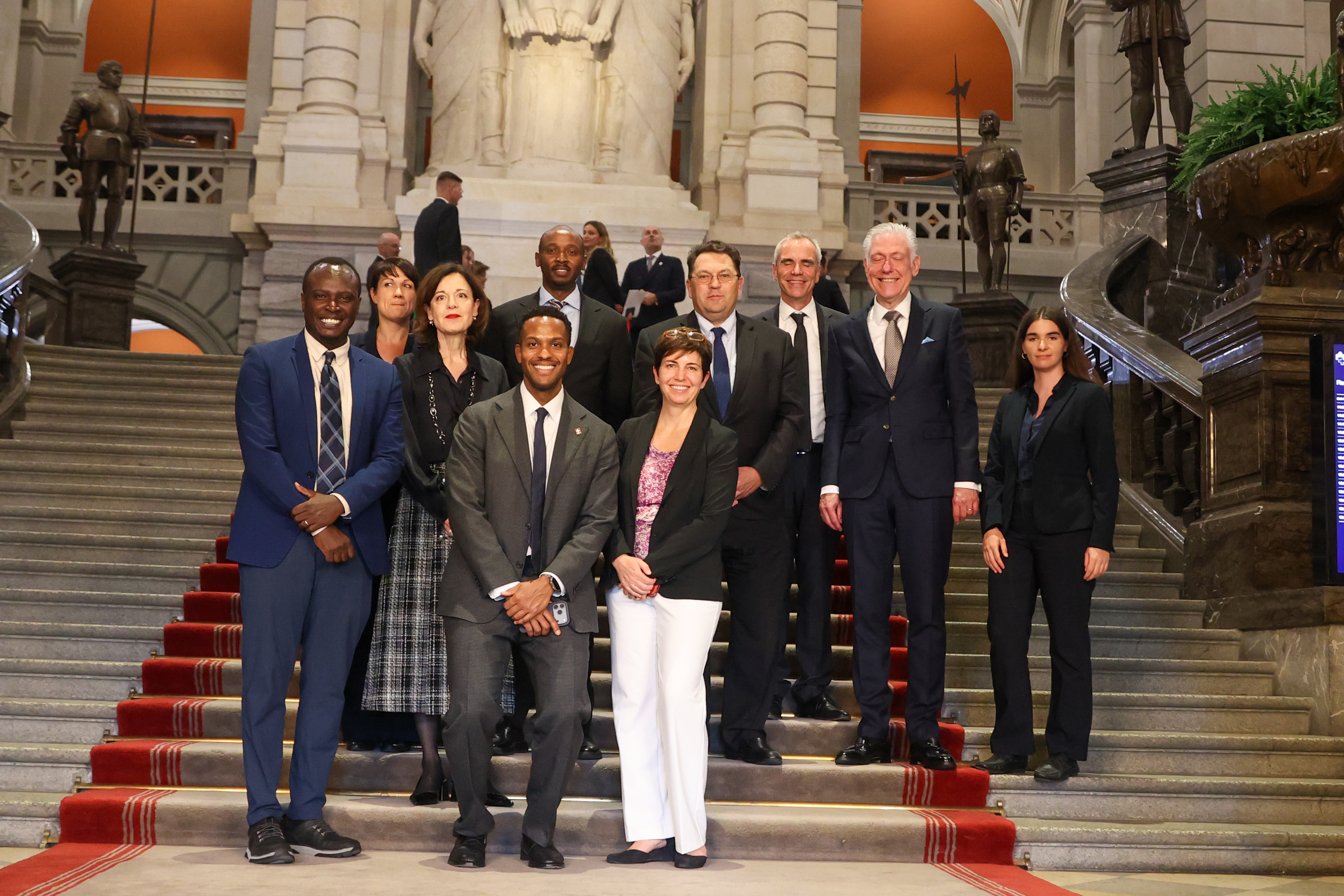
Rwanda's Minister of Health Meets Swiss Parliamentarians in Bern
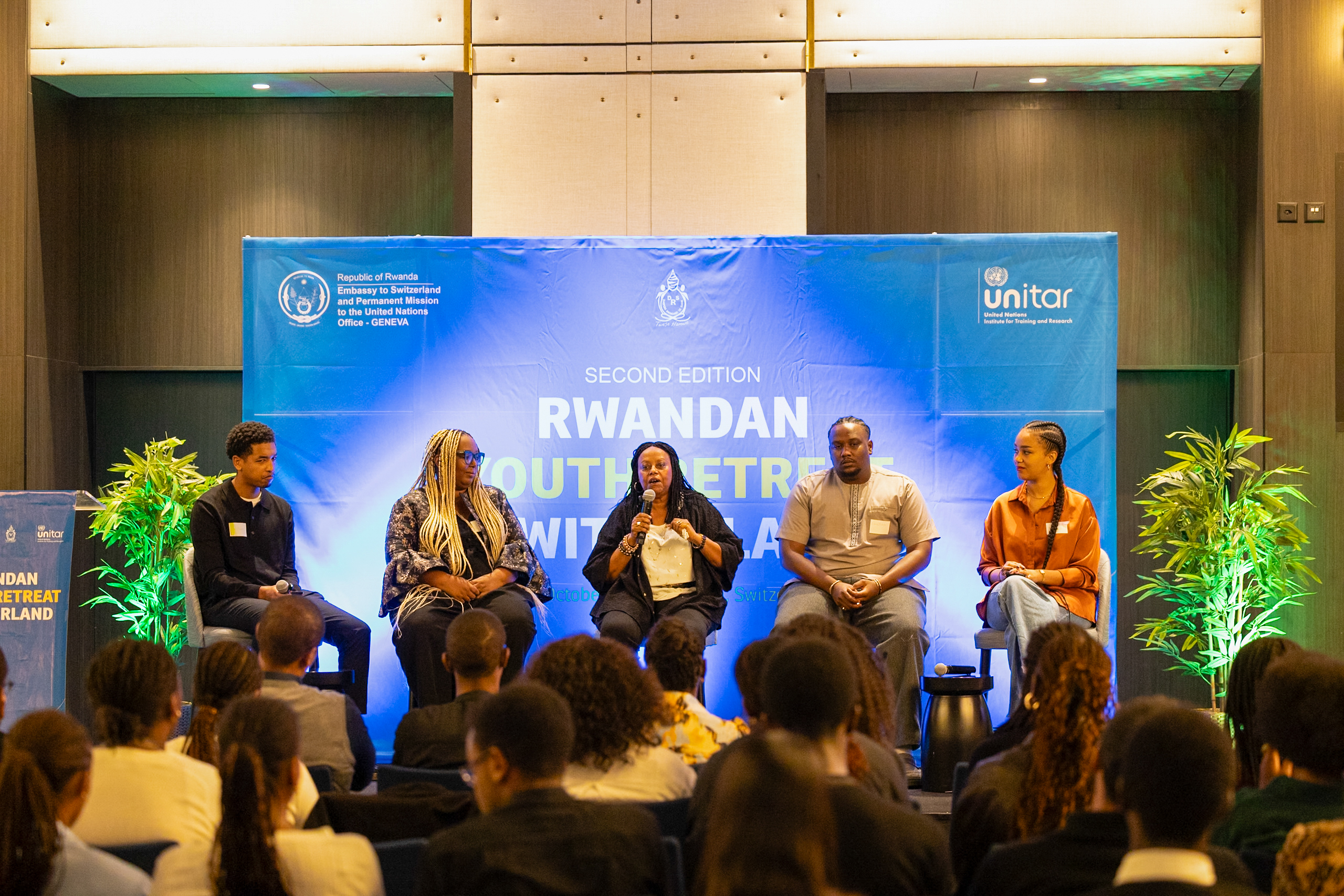
Young Rwandans in Switzerland, Austria and Beyond Chart Pathways for Continued Engagement with Rwanda