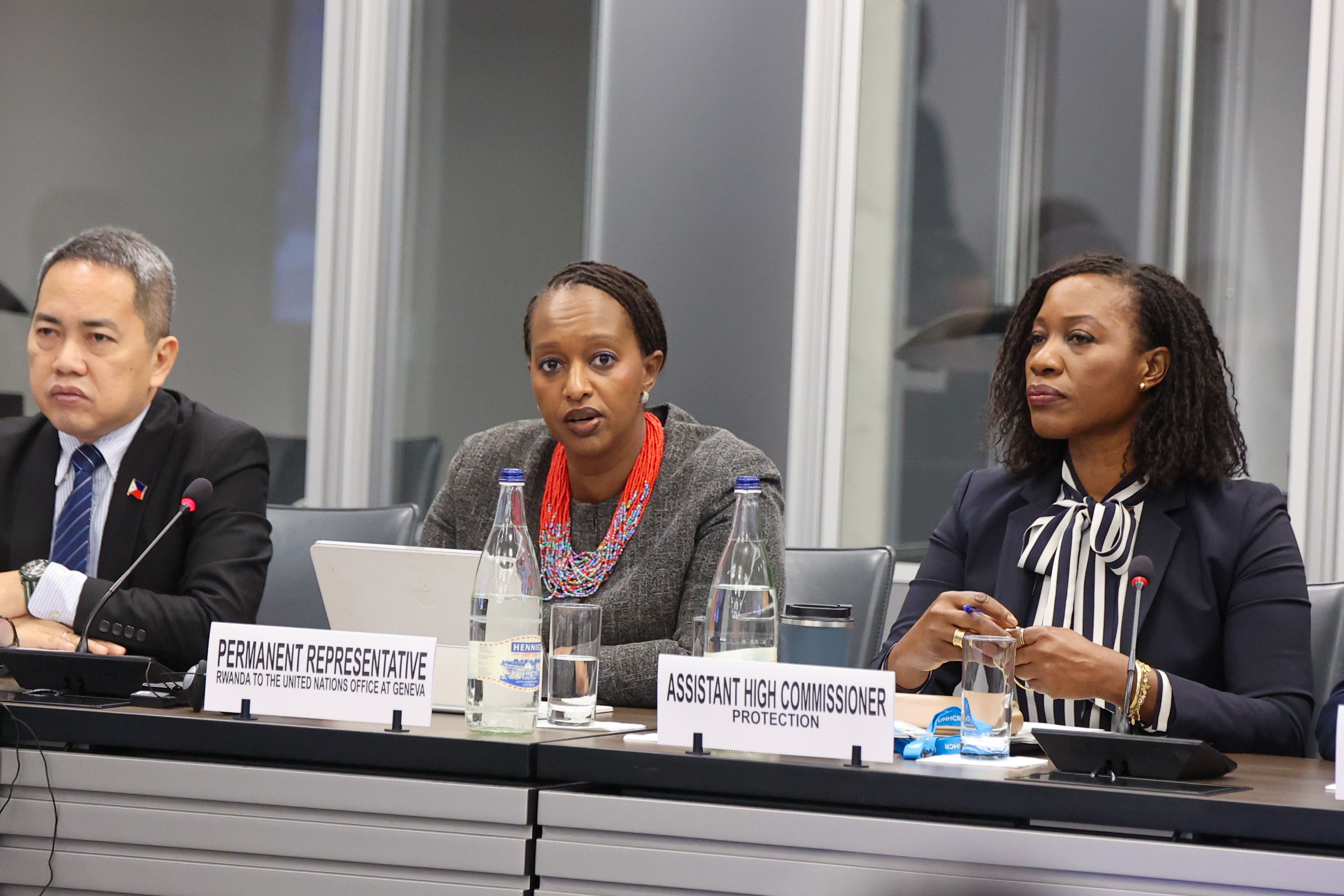
Rwanda’s Statement at the UNHCR ExCom77 Side Event Marking the 65th Anniversary of the Convention on the Reduction of Statelessness
Madam Assistant High Commissioner,
Excellencies,
Distinguished colleagues,
To understand Rwanda’s approach to preventing statelessness, we must begin with the challenge of rebuilding a nation whose social fabric had been completely torn apart by the 1994 Genocide against the Tutsi.
In the aftermath, Rwanda faced the enormous task of reconstructing its institutions while welcoming back generations of refugees, many of whom had lived outside the country for decades. Families had lost documentation, children had been born without birth registration, civil registration systems had been greatly weakened, and gaps in nationality laws complicated the recognition and confirmation of nationality.
This experience has shaped Rwanda’s approach to preventing statelessness. Since acceding to the convention in 2006, Rwanda has sought to address these challenges through several complementary measures.
First, strengthening the legal and institutional framework.
Rwanda established a National Taskforce on Statelessness in 2019 and adopted a National Action Plan. Our 2021 nationality legislation recognizes statelessness as a ground for acquiring Rwandan nationality, allowing stateless residents to apply for nationality, while also providing safeguards against revocation that would result in statelessness.
Second, ensuring that people are identified and included.
Our 2023 population registration law introduced the framework for a Single Digital Identity system covering citizens and non-citizens, including refugees, asylum seekers and stateless persons.
Importantly, the framework accommodates individuals who lack conventional documentation, including through testimonial evidence. Here, one distinction is particularly important: legal identity is not the same as nationality. Digital systems can make individuals visible to public institutions, but registration alone does not resolve their nationality status.
Third, prioritizing prevention, particularly for children.
Rwanda has strengthened birth registration through health facilities and dedicated civil registration initiatives, including opportunities for late registration of refugee children born in Rwanda.
Our experience reinforces a simple principle: a child should not inherit the consequences of missing documents, displacement or uncertainty surrounding their parents' legal status.
Yet, we also recognize important implementation challenges.
People without documentation are often the hardest to reach. As identification becomes increasingly digital, we must also safeguard personal information and ensure that technology reduces exclusion rather than reinforcing it.
From Rwanda's experience, three lessons stand out.
- Legal safeguards must be supported by institutions capable of interpreting and applying the law fairly, consistently and with due consideration for individual circumstances.
- Civil registration must reach the families and children that are the most vulnerable.
- And lastly at the continental level, we need to strengthen cooperation. This is why Rwanda is also working towards ratification of the African Union Protocol on the Right to Nationality and the Eradication of Statelessness, recognizing that these challenges often extend beyond national borders.
I will conclude with a testament of our shared humanity and an example of challenges far beyond our national borders, yet remain too familiar.
When Rwanda began rebuilding its institutions and strengthening its legal safeguards over 20 years ago, we could never have imagined that, these efforts would form part of a broader commitment that would see our country welcome Afghan girls and their families to allow them to continue their education at the School of Leadership Afghanistan, also known as SOLA now located in Rwanda.
Their story reminds us that the impact of our laws and policies can reach far beyond what we originally imagined.
Sixty-five years after the Convention, let us remember that our responsibility goes beyond legal recognition. It is about giving every child a fair chance to belong, to dream, and to fulfil their potential.
I thank you.
Rwanda’s Statement at the UNHCR ExCom77 Side Event Marking the 65th Anniversary of the Convention on the Reduction of Statelessness
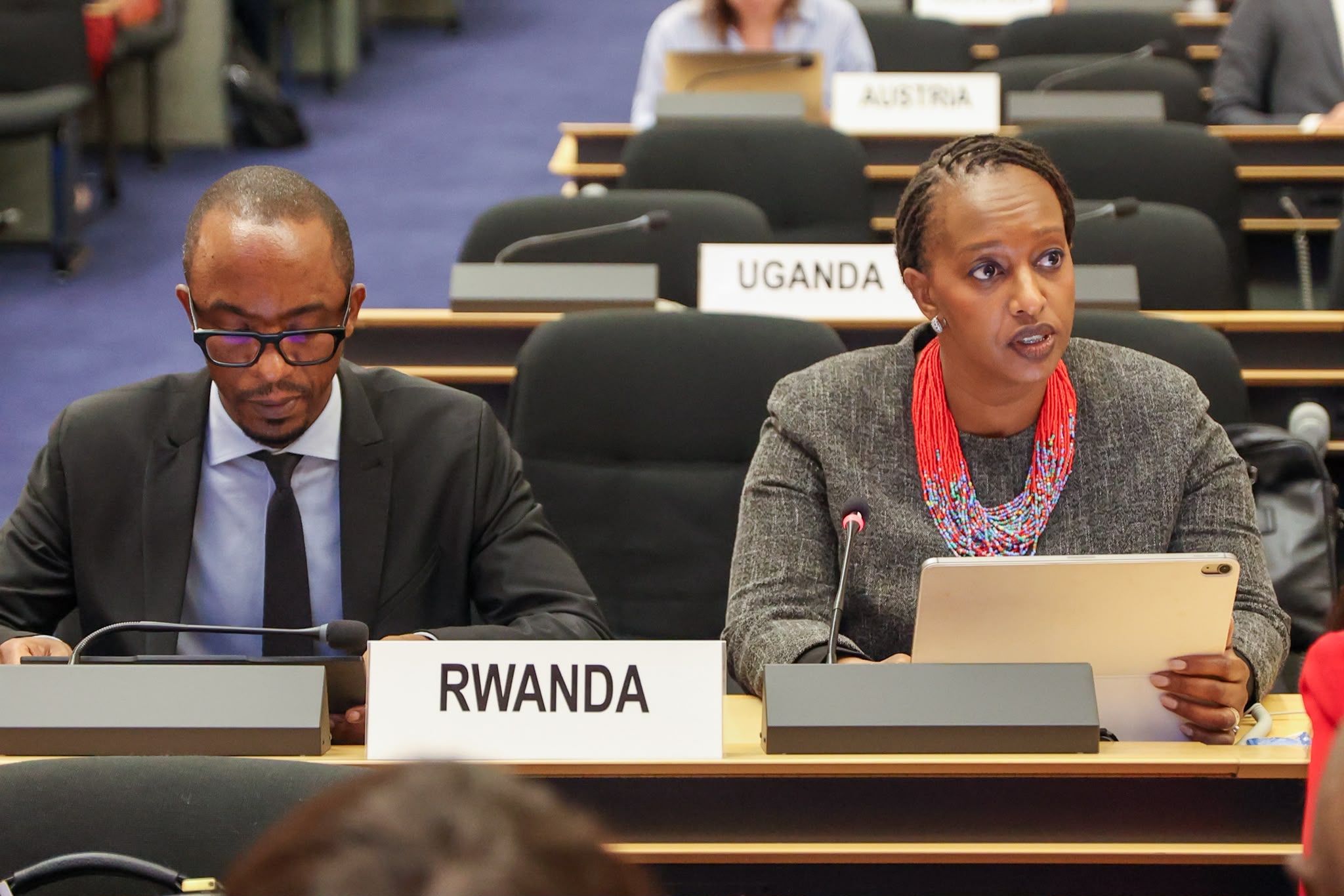
Rwanda's National Statement at the 77th Session of the UNHCR Executive Committee
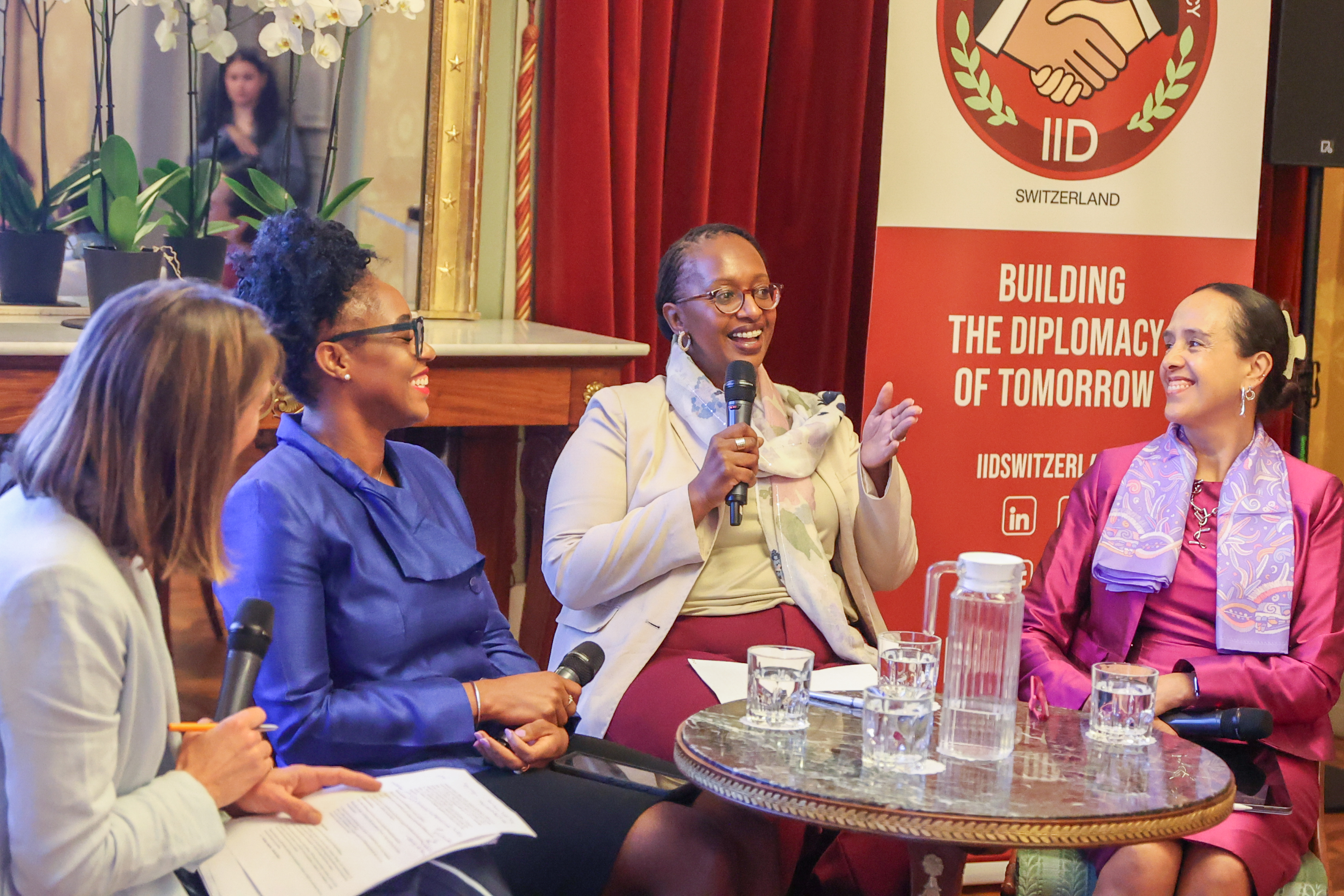
Ambassador Urujeni Bakuramutsa Participates in Roundtable on Women in Diplomacy in Geneva
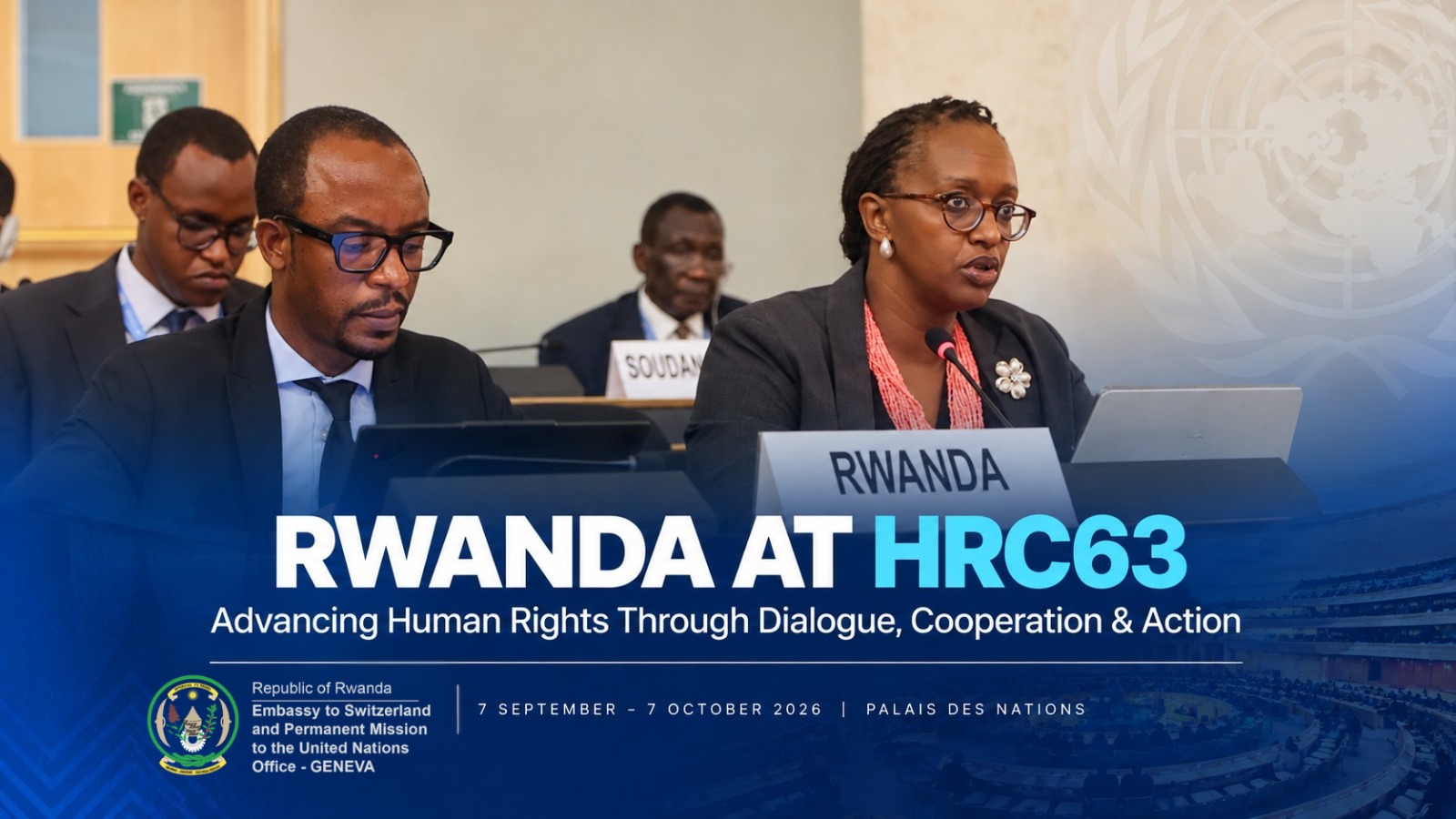
Rwanda’s Engagement at the 63rd Session of the Human Rights Council
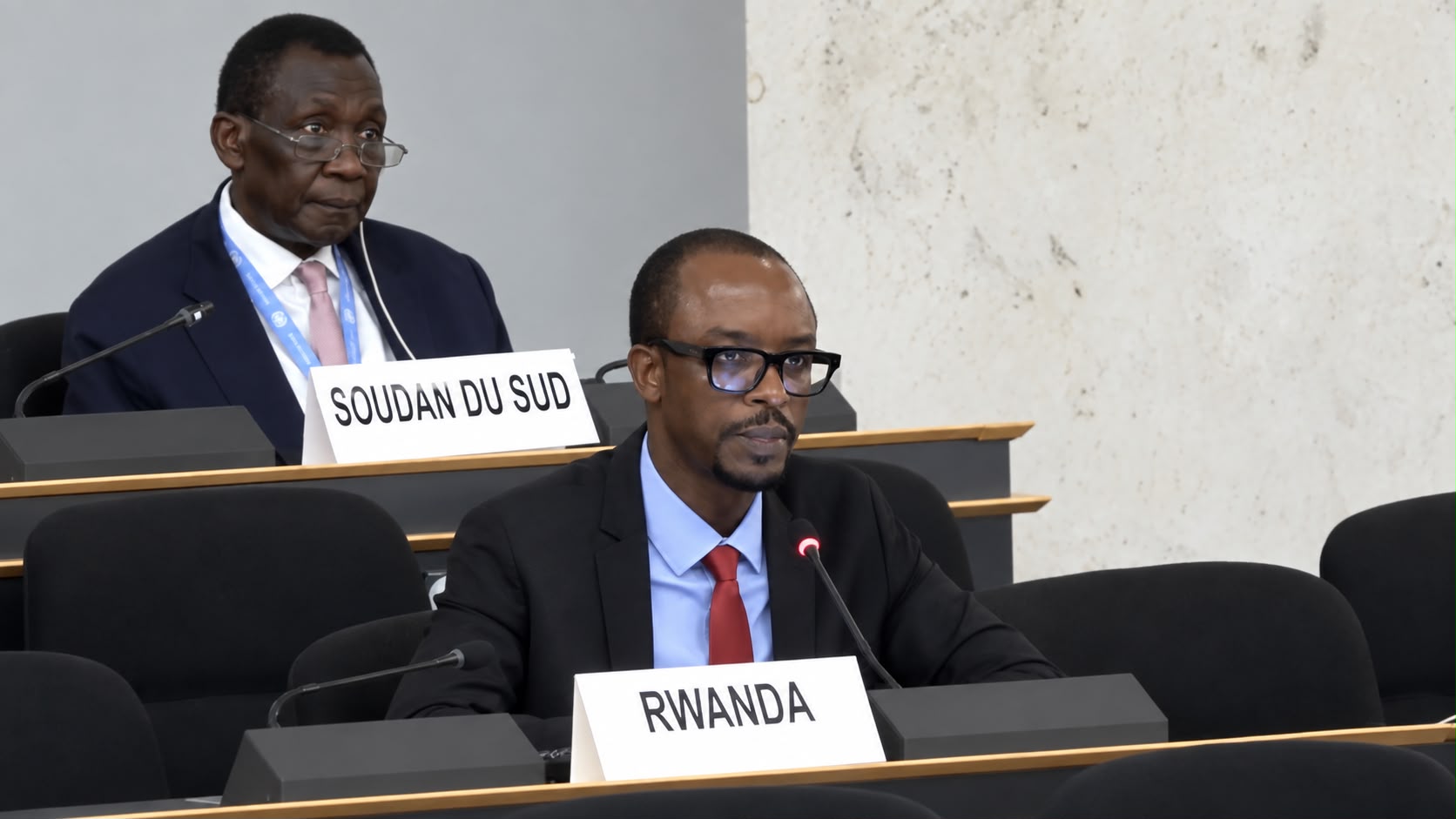
HRC63: Rwanda’s Statement on the Adoption of the Resolution on Technical Assistance and Capacity-Building in the DRC
Rwanda and Switzerland Strengthen Exchanges on Health and Life Sciences
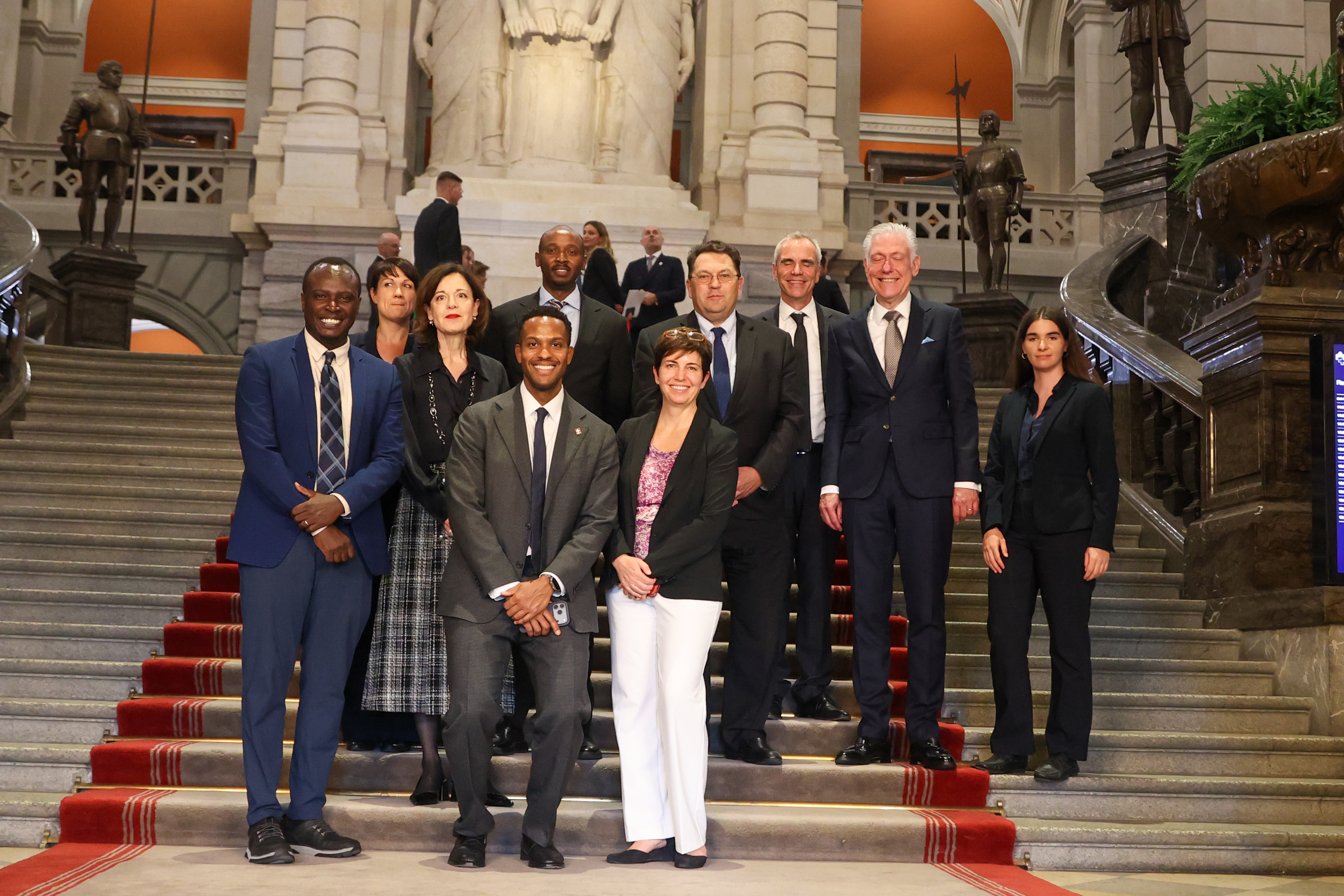
Rwanda's Minister of Health Meets Swiss Parliamentarians in Bern
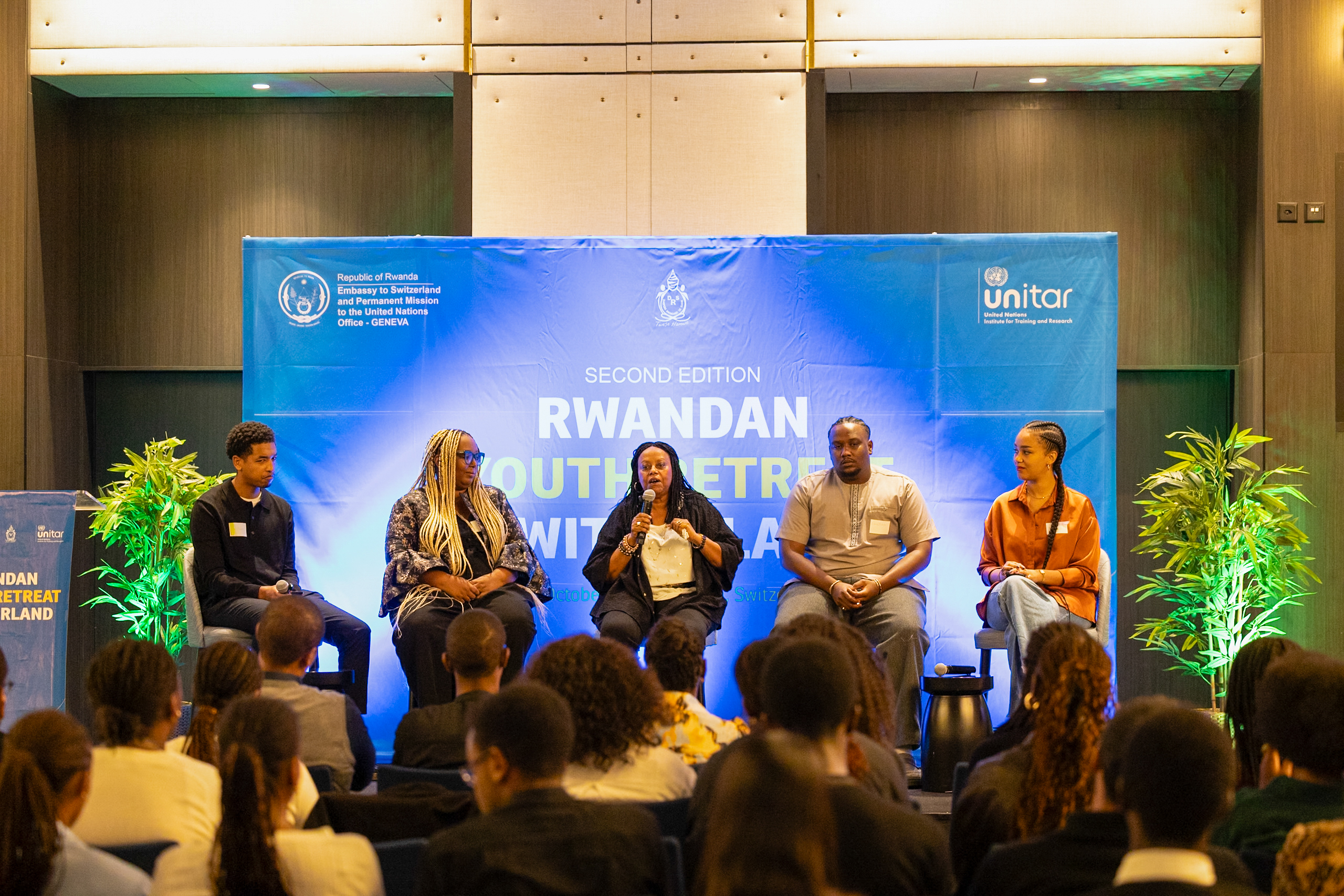
Young Rwandans in Switzerland, Austria and Beyond Chart Pathways for Continued Engagement with Rwanda